Museum Quest
Design Case Study
Made in partnership with the Edmonds Historical Museum, Museum Quest explores how technology can reinvigorate the museum experience through gamification.
Client
Edmonds Historical Museum
Date
2023
Contribution
UI & UX Design Project Management Design Pitch
Tools
Figma
The Situation
As part of an effort to make the museum more enticing to visitors, the Edmonds Historical Museum partnered with my cohort of designers at UW. The museum was somewhat outdated, and its leadership was exploring potential ways to expand and refresh. One of the museum's vice presidents, Arnie Lund, was in contact with our current professor and served as a guide/point of contact for the project.
Approach
Our goal for the project was to design and prototype a method of making the museum more attractive to an audience we would select. To accomplish this, we planned on familiarizing ourselves with visitor habits and the museum's goals, then selecting an audience we felt we could design effectively for. Our design would then be prototyped, tested, and presented to stakeholders from the Edmonds Museum.
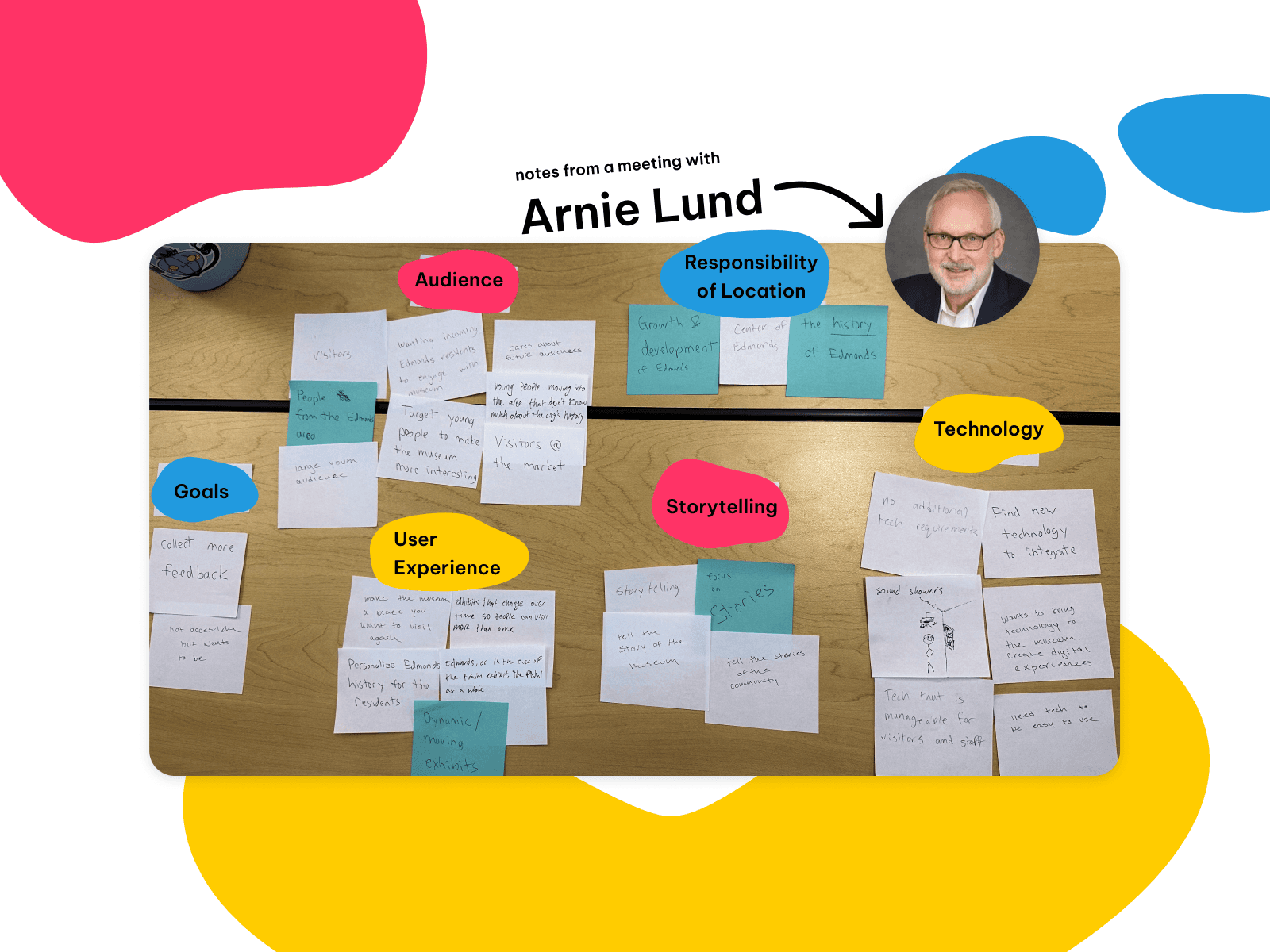
Some messily compiled notes from a meeting with the VP of the Edmonds Museum
Research
The Edmonds Museum's Mission
Our project began with an in-depth meeting with Arnie Lund, the museum's vice president. We learned about the museum’s mission, impact on the Edmonds community, and the demographics they serve. Our team organized key takeaways by theme, identifying that storytelling and appealing to younger audiences were central goals.
Observing Visitors
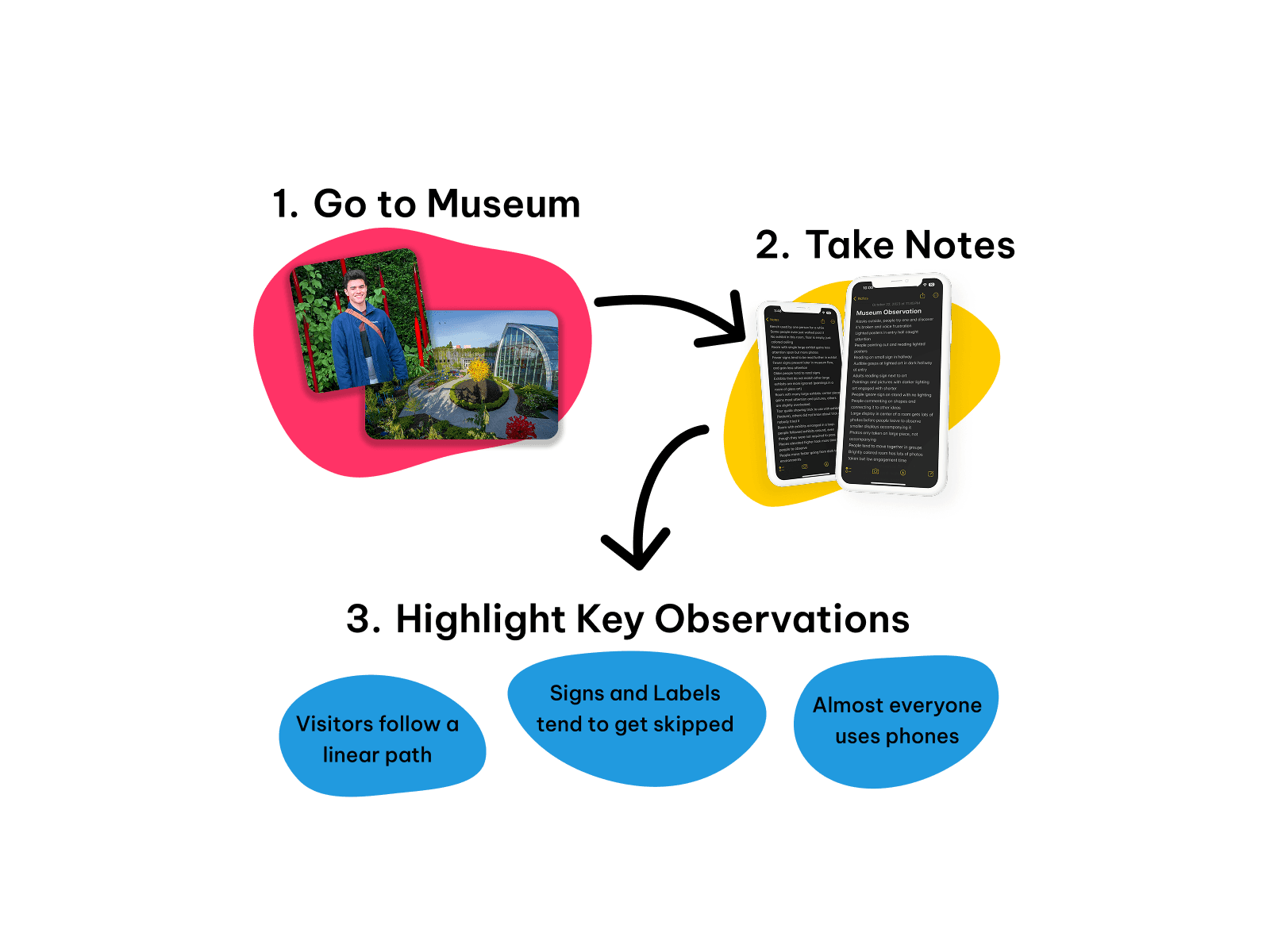
To inform our design further, each team member visited a local museum to study visitor behavior. I visited the Chihuly Garden and Glass Museum in Seattle, where I took notes of how visitors behaved. The most prevalent findings I found were that:
Visitors tended to follow a linear path.
Labels and signs received lower attention that I expected.
Most people used their phones frequently during their visit.
Design Foundation
Defining the Audience
After our research, each team member created a persona to explore potential users. My persona focused on youth, informed by my experience volunteering with children. We then compared them to identify a shared passion for designing for families, particularly newer families in the Edmonds area with children. Arnie Lund had focused on this audience, and we hoped that our design could make the museum a more lovable spot for families to spend time together while learning about their home.
Early Ideation
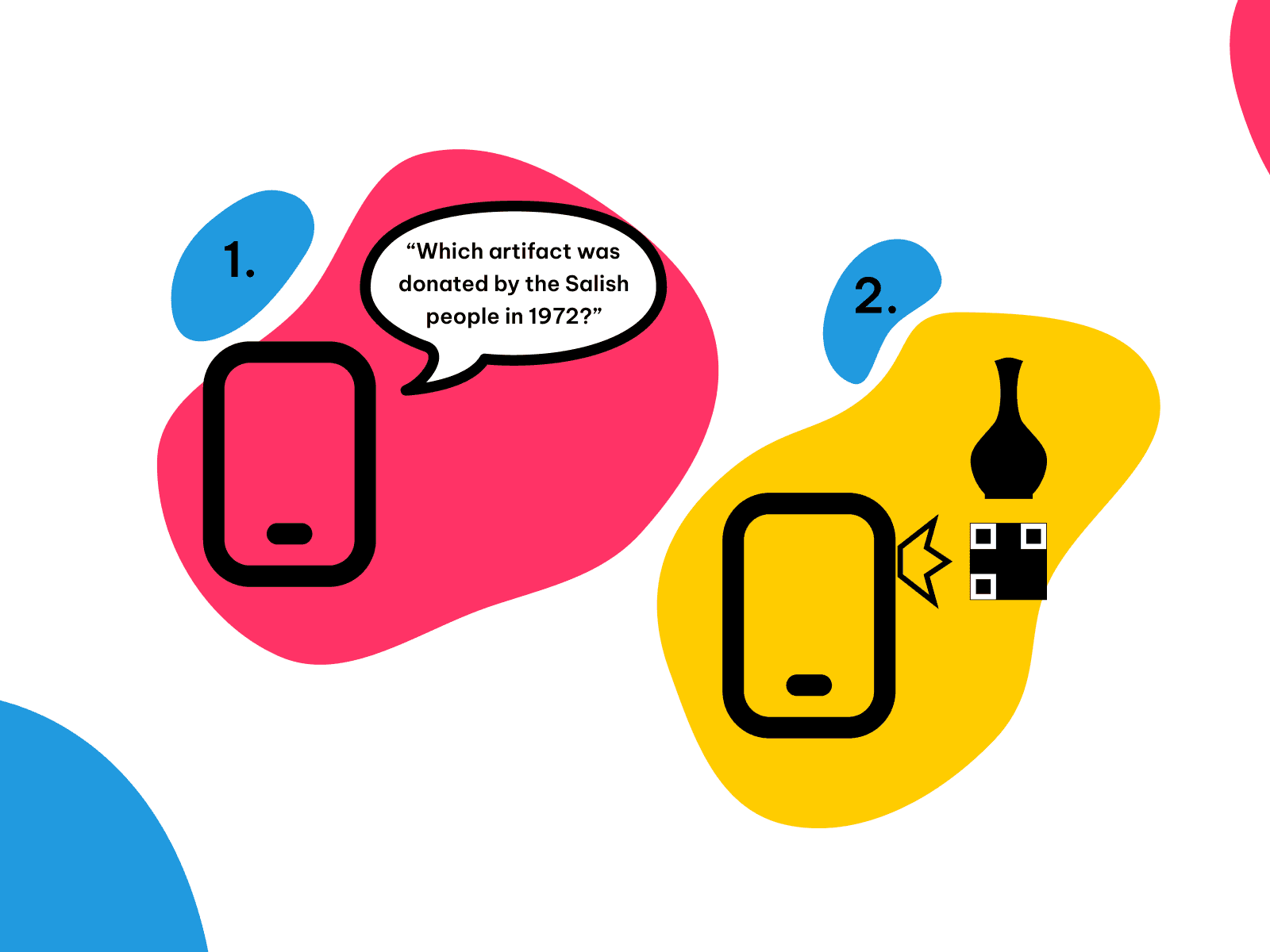
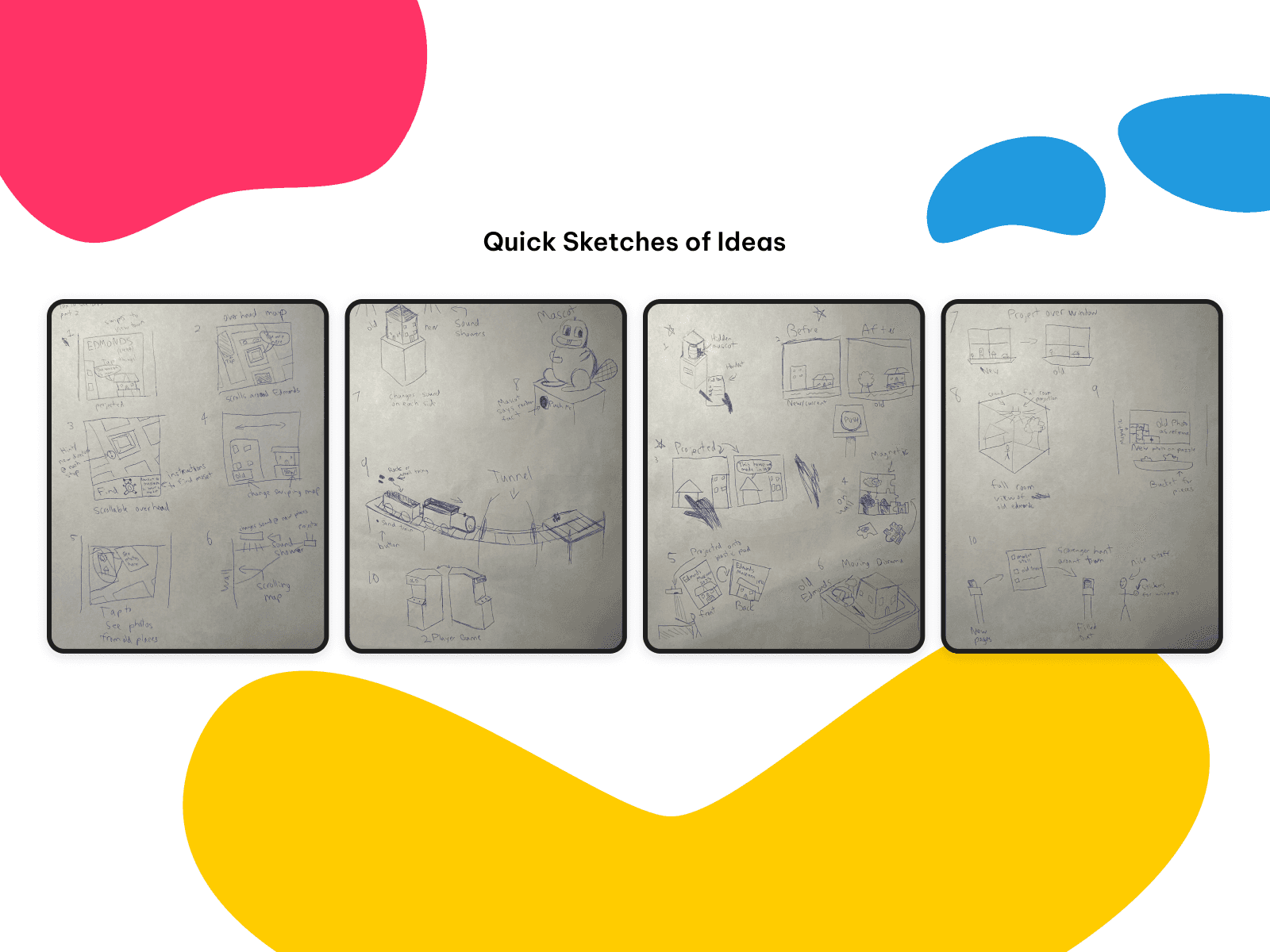
I then sketched early ideas for our design centered on gamification and interactive play. The team then reviewed ideas, and we aligned around the concept of a web-based scavenger hunt game accessible by phone. Visitors would answer exhibit-related questions and had to scan a QR code on the correct exhibit to progress. This concept combined storytelling, interaction, and the already available technology of phones, which was perfect for the museum's goals.
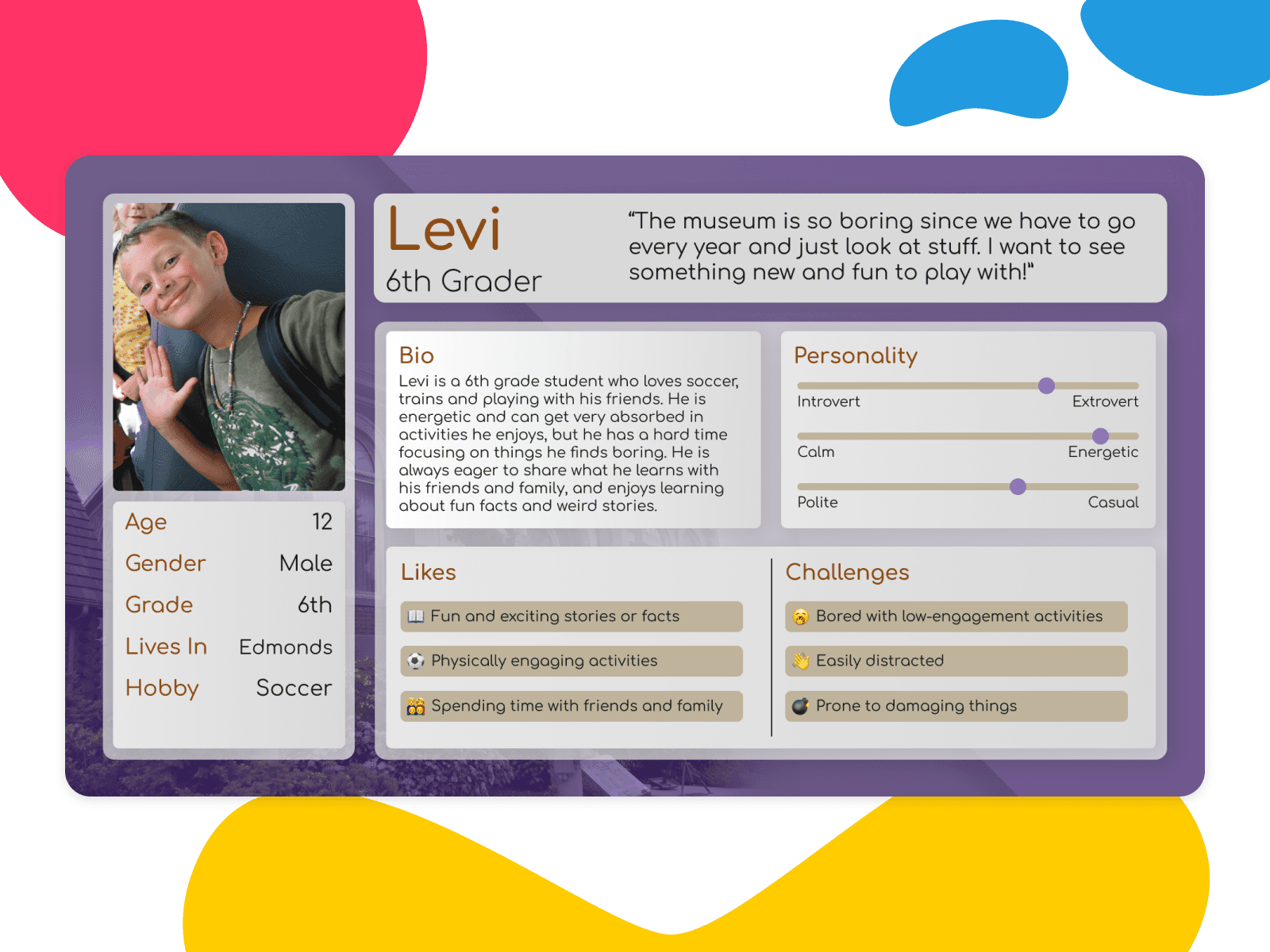
A fictional persona made to compare traits of potential target audiences
Initial Design
Wireframing
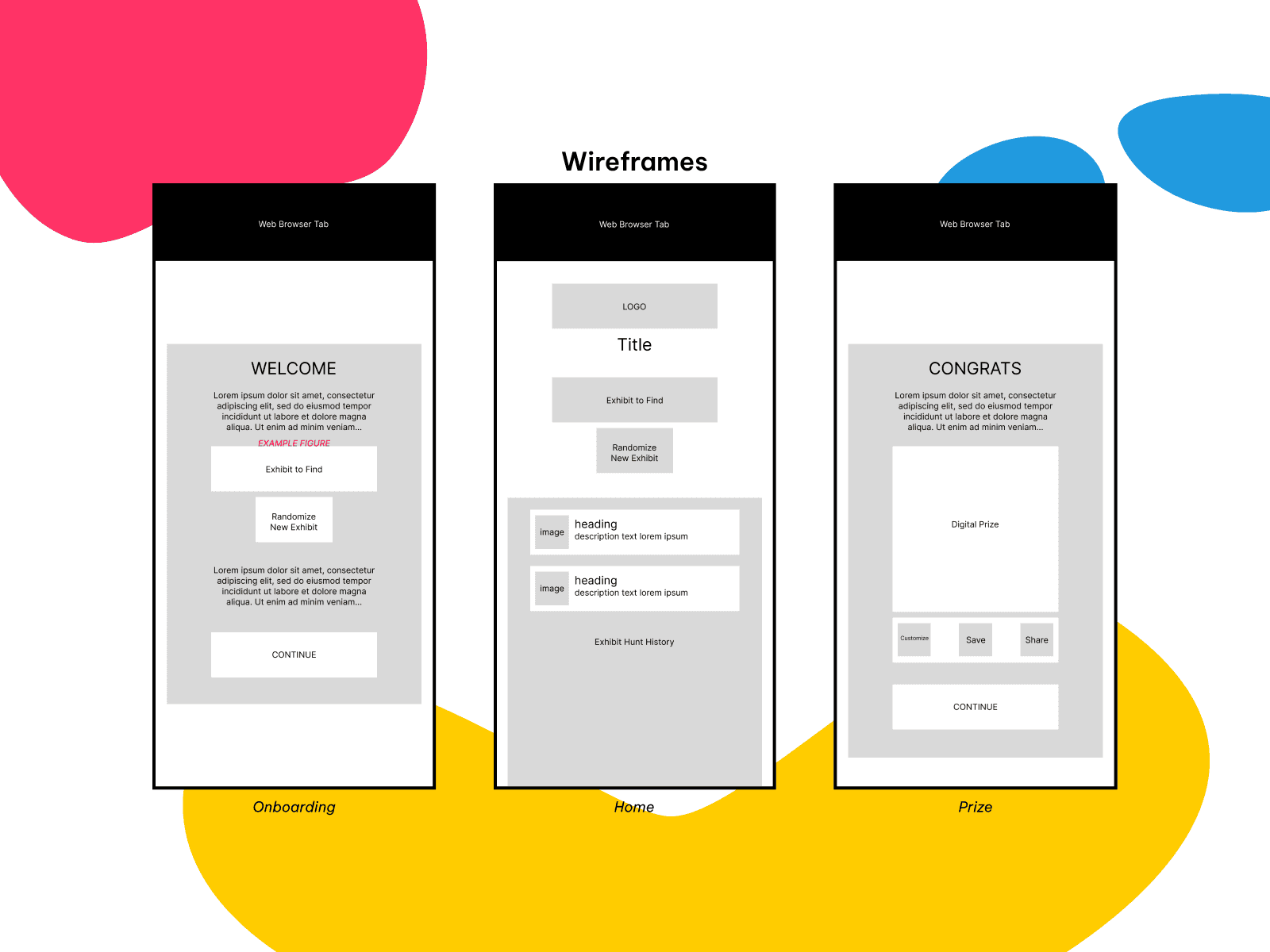
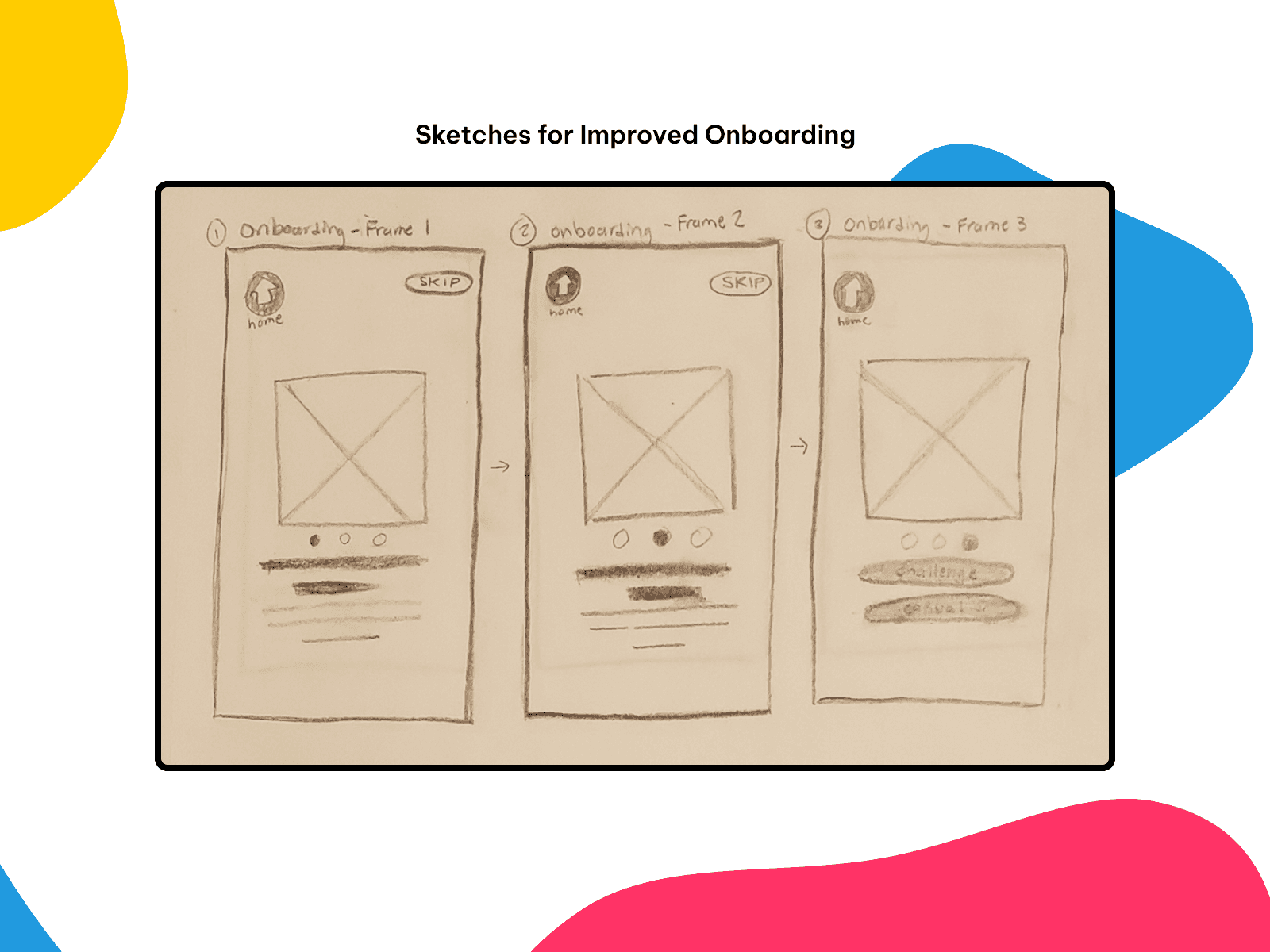
I contributed early wireframes that laid the foundation for the app's structure and user flow. I was specifically responsible for creating an onboarding, home, and prize screen. Combining these wireframes with the rest of the team's gave us a full user flow we could stylize and iterate with.
Early Prototype
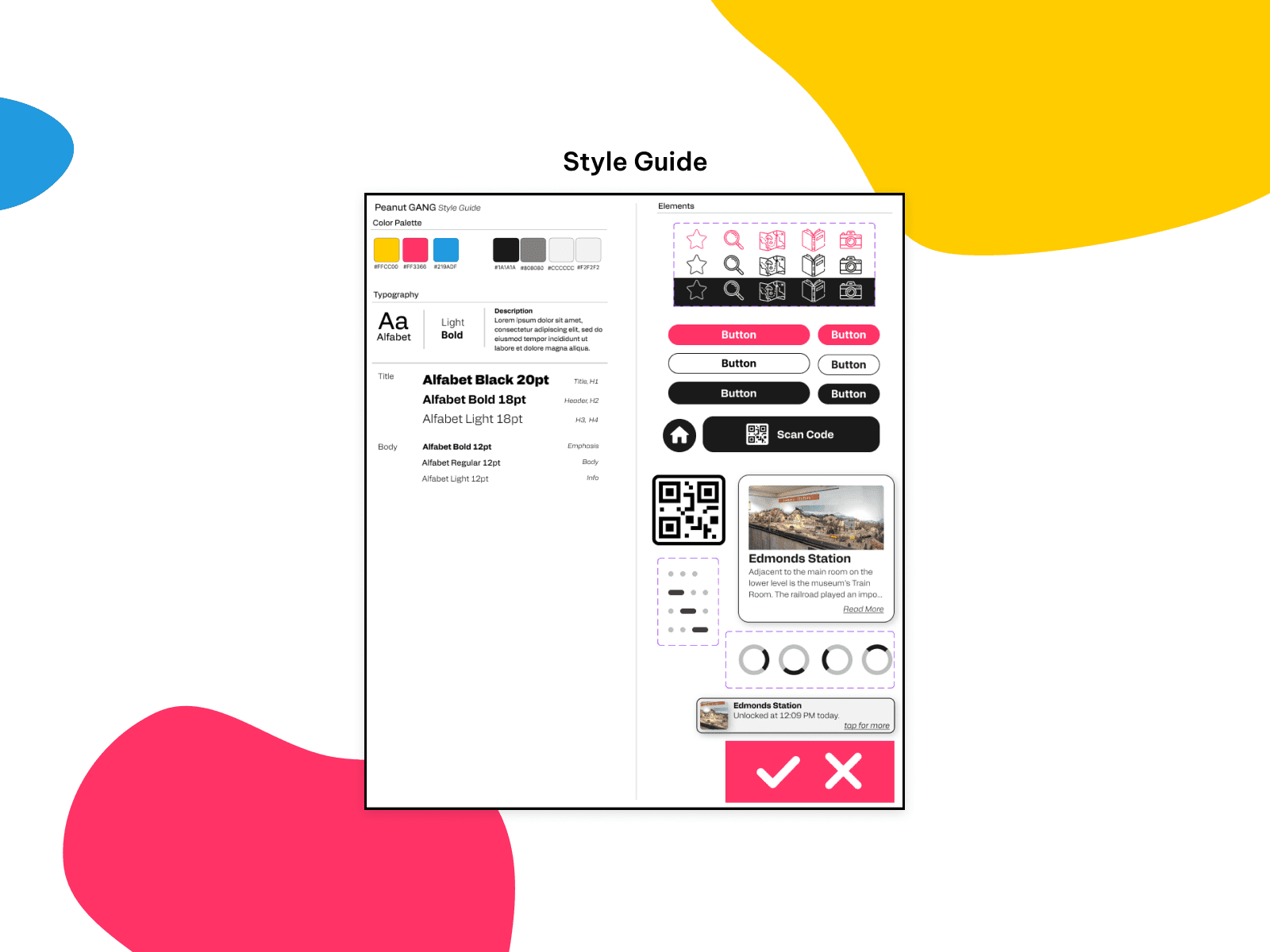
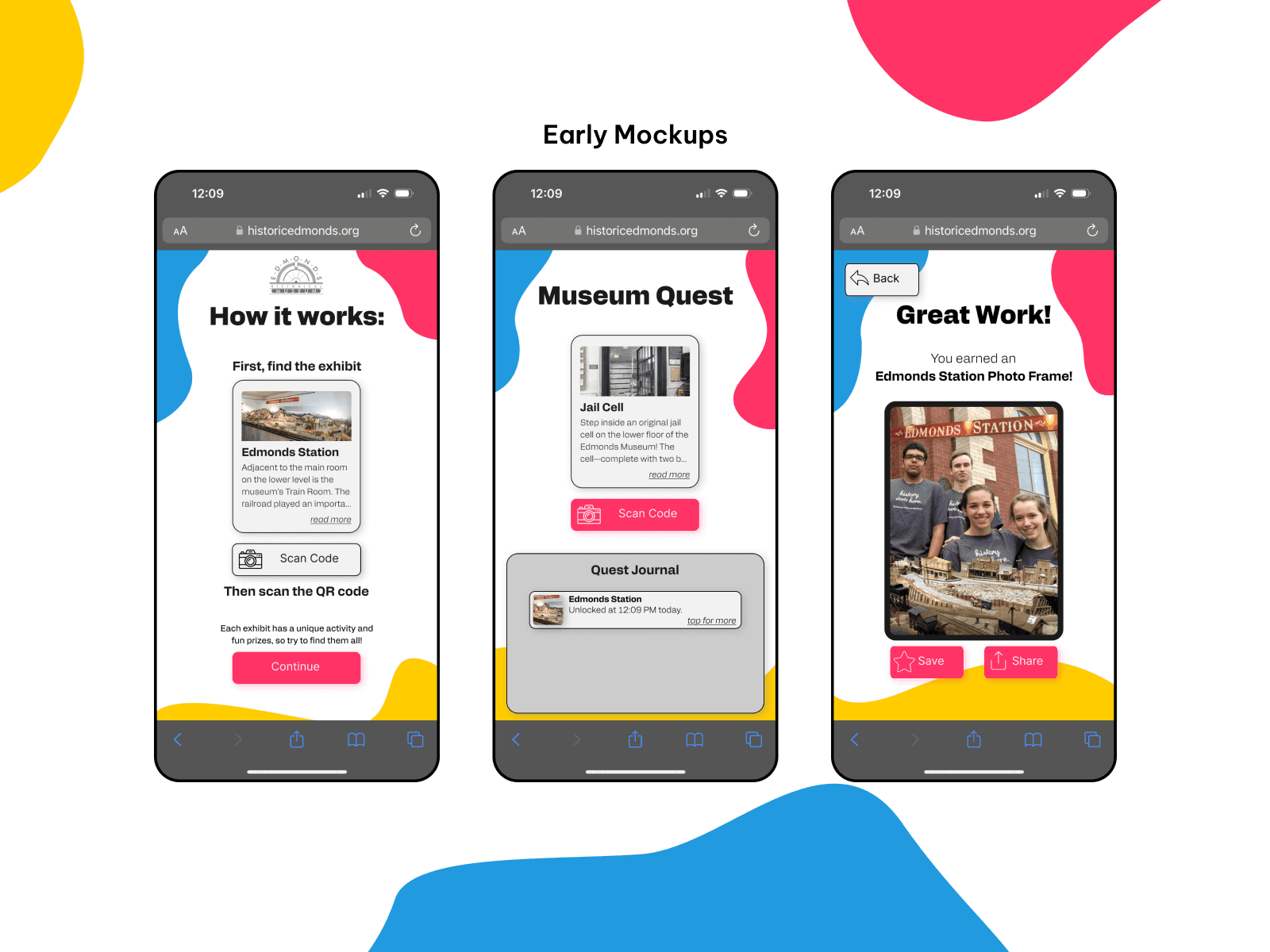
With the wireframes complete, we applied some styling to create a mockup that could be tested. I contributed many of the reusable components, such as buttons and icons. By applying styles now, we could test how colors and fonts would play into the users' experience.
User Testing and Improvements
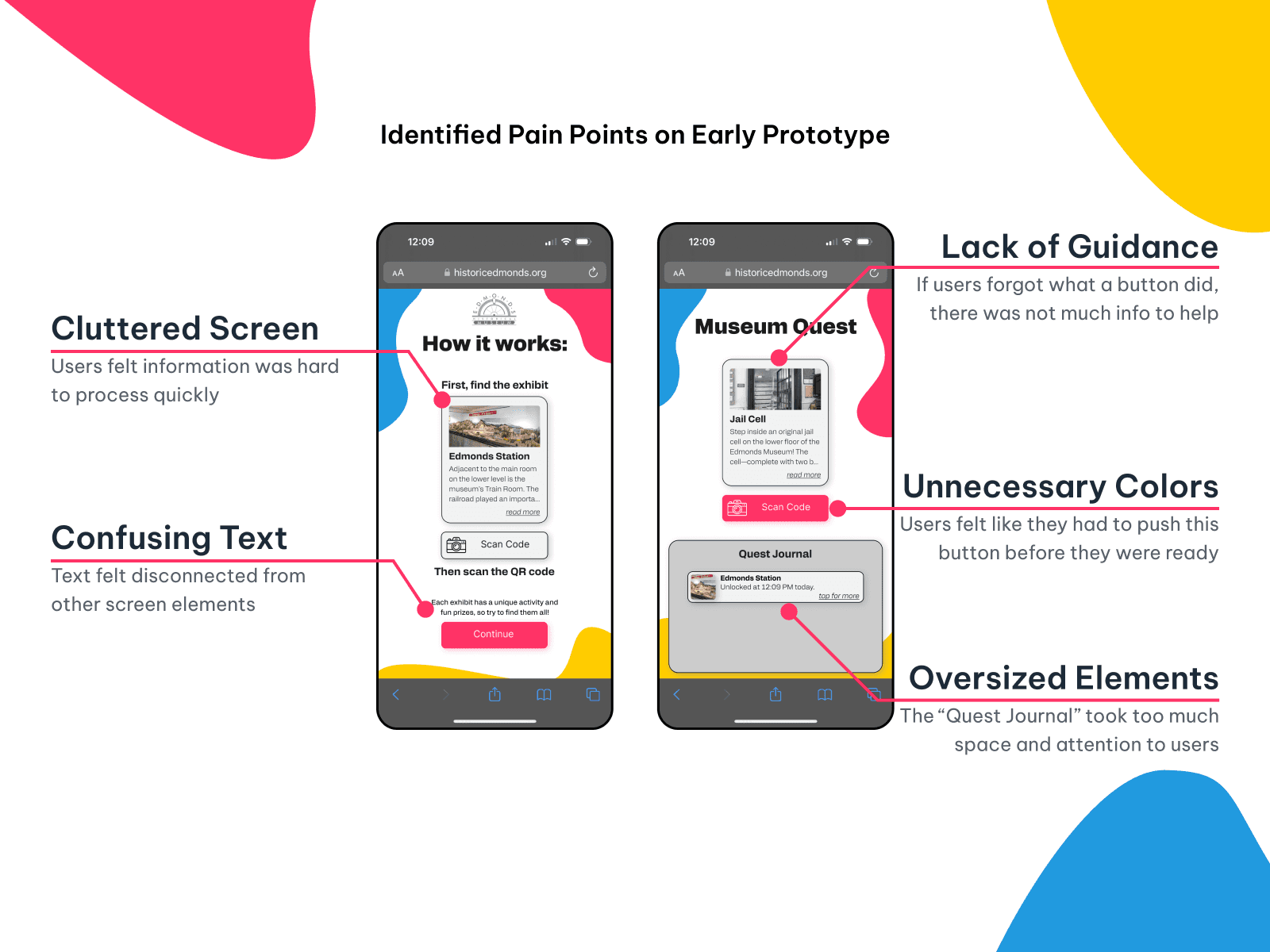
Once styled and combined, we made our prototype interactive using Figma. We then conducted 20 user tests (mostly with fellow classmates, some with young children and adults) and gather data on areas of improvement.
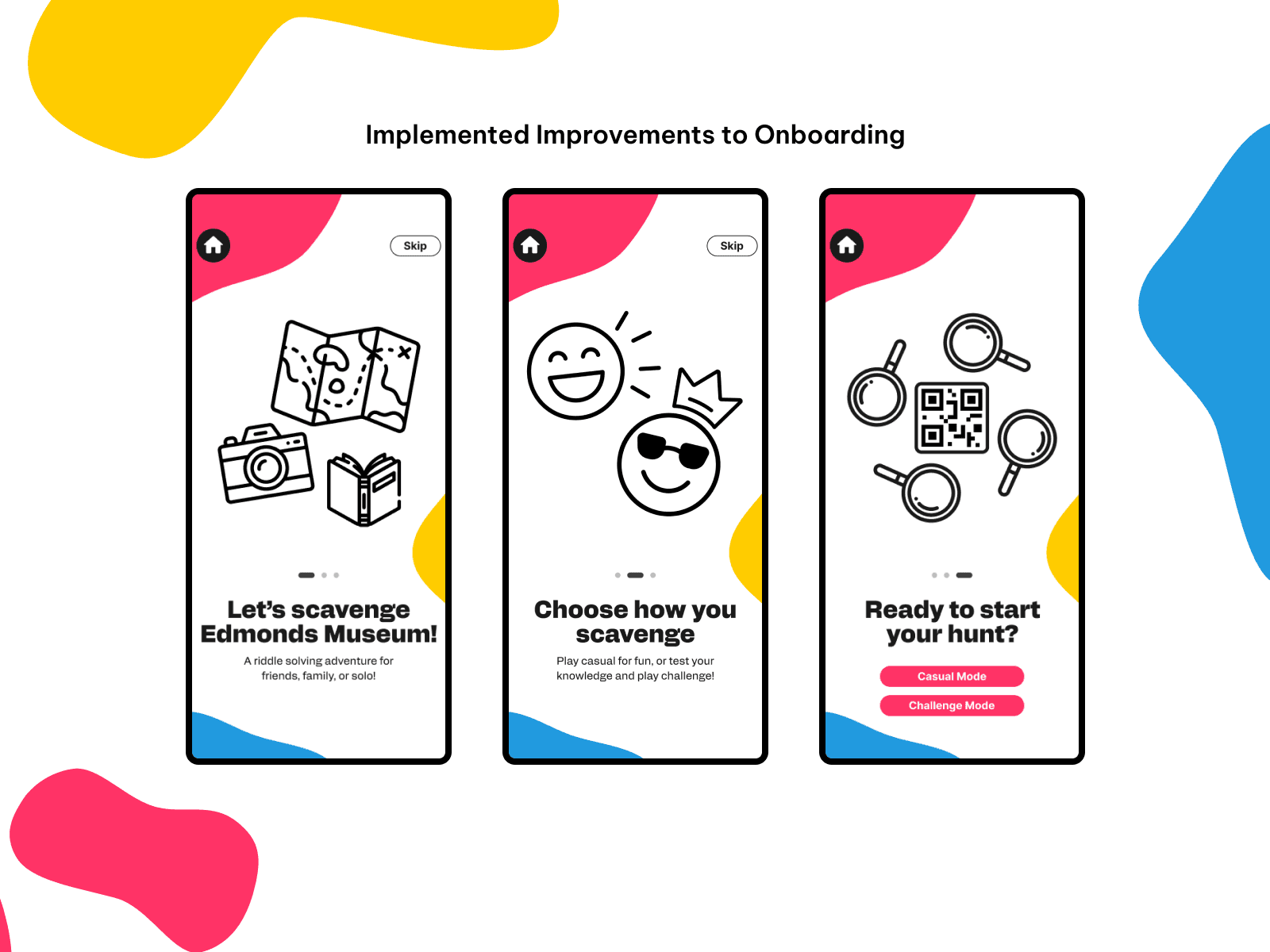
One major improvement I helped implement was redesigning the onboarding experience. To do this, I worked closely with a fellow designer, Lars, to space out instructions across multiple screens, reducing cognitive load and making information easier to read.
Final Product
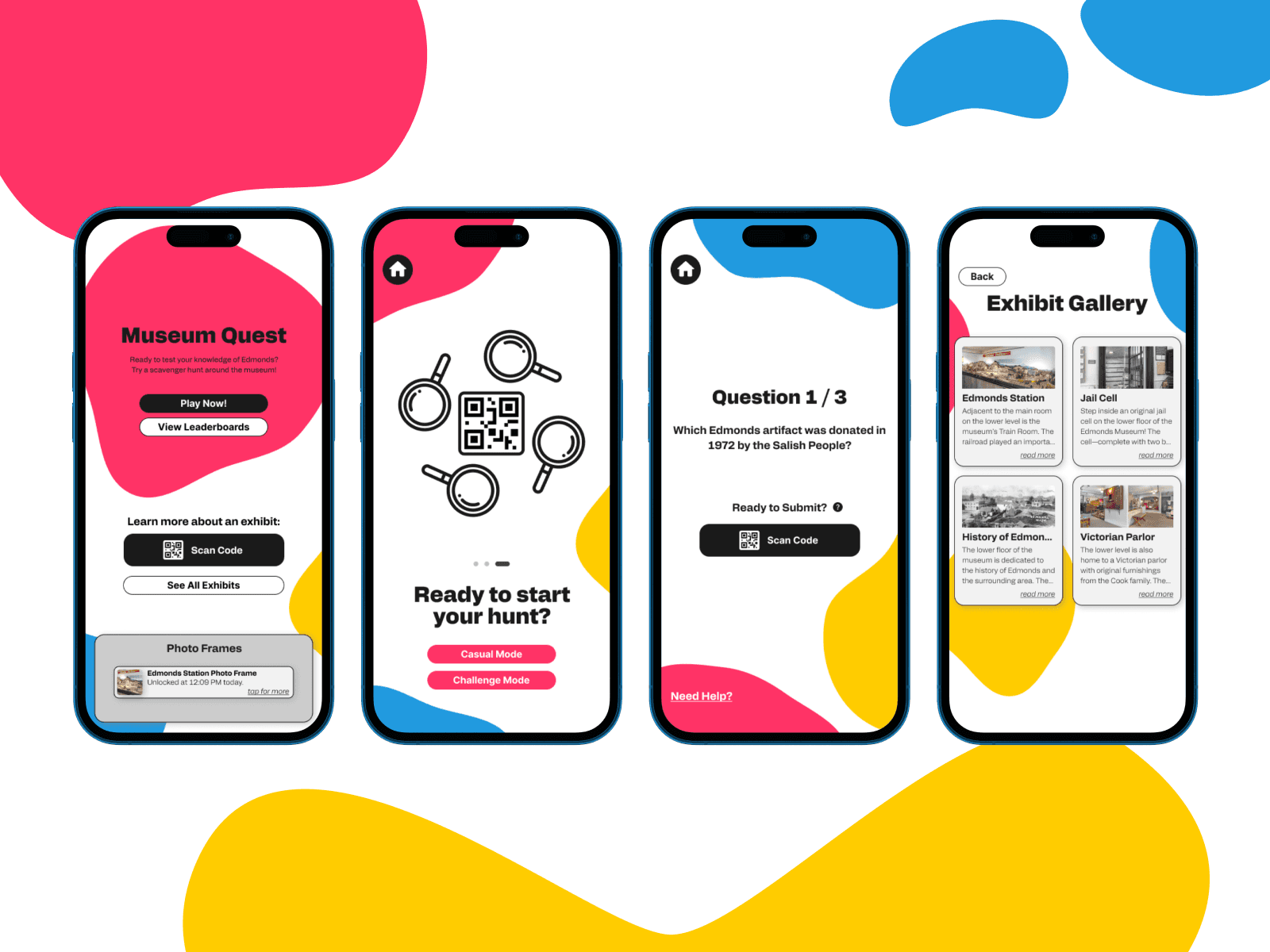
Our final design primarily featured the scavenger hunt game, where users would be given a question about an exhibit in the museum, and would have to respond by finding the correct exhibit and scanning a QR code on it. By playing the game, users could earn digital prizes (such as photo filters/frames) or compete for spots on a leaderboard.
This final iteration was given more whitespace and screens to make it easier for users to process. Colors and buttons were also revisited to address issues found in our testing.
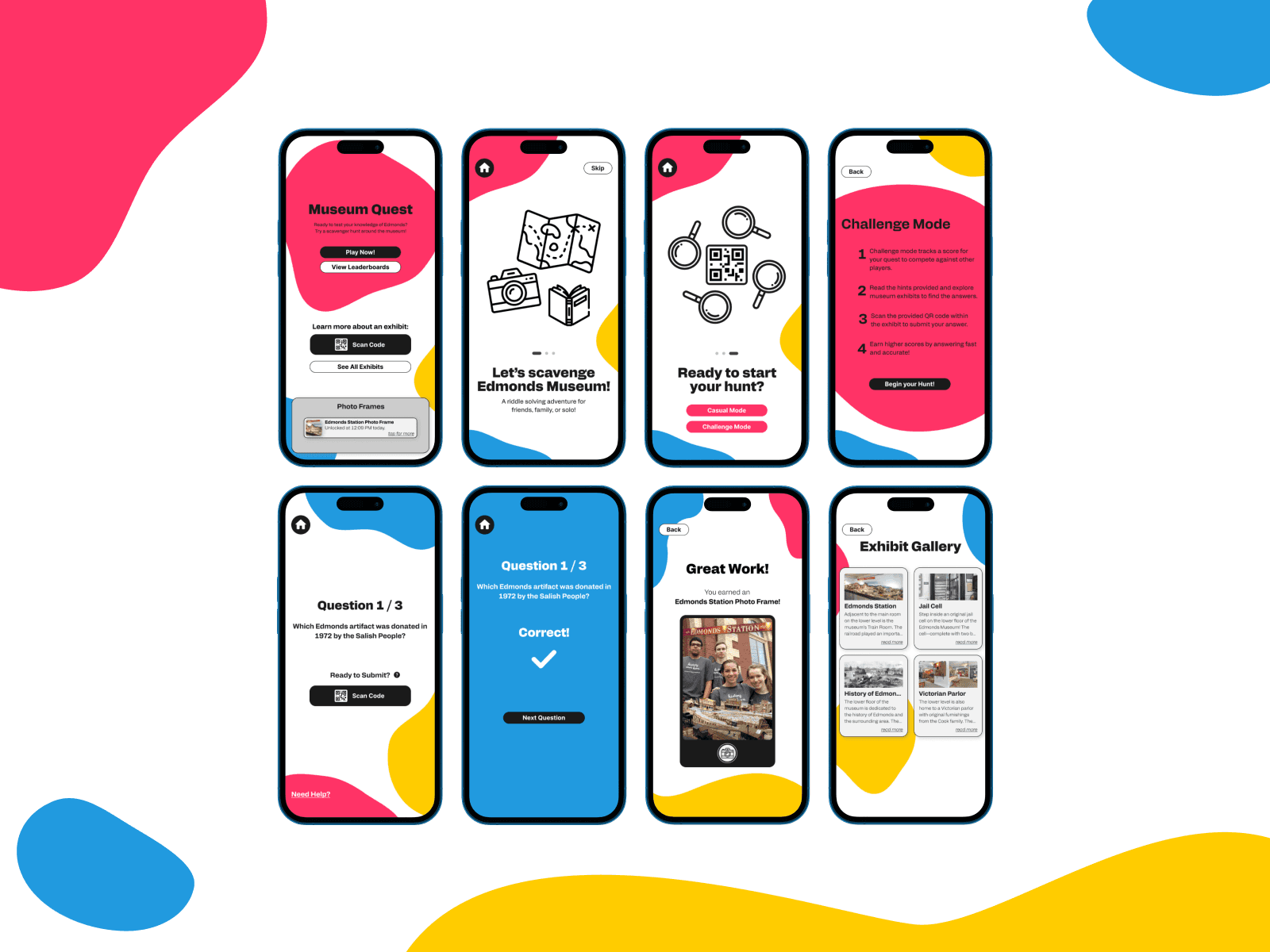
Screens from our final design. An interactive prototype is available below!
Presentation
The concept was well-received by stakeholders at the Edmonds Historical Museum. While the project was not adopted in its entirety, the ideas of QR codes, a digital database for exhibits, and gamification were all commented on as exciting and promising!
Museum Quest showed how everyday technologies could be leveraged to transform familiar experiences without being too costly. For me, working on this project revealed the complexities and benefits of collaboration, and has helped me grow as a teammate and leader.